From Wednesday Night Sail to Alaska: Anna Withington on Getting Started in Offshore Racing
Published 11:17am on 12 Oct 2026
A recap of September’s OWSA member presentation
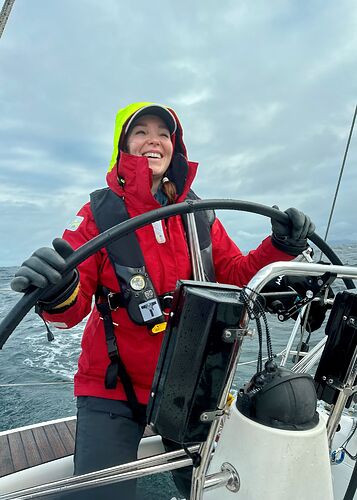
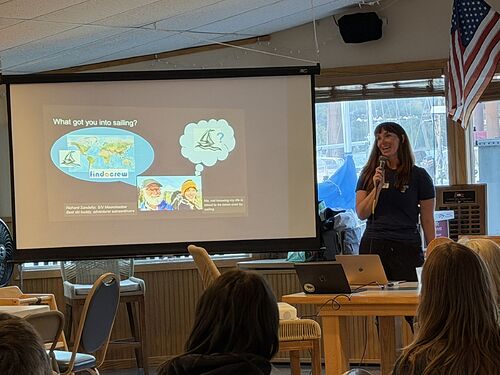
Anna Withington describes herself as “a pretty new sailor.” In under three years she has gone from an OWSA intro class to the Pacific Northwest Offshore Race, Swiftsure and the Race to Alaska. At our September gathering she shared how she did it, and why she thinks you can too.
A fast start
Anna took the OWSA intro class in April 2024 and began crewing on Wednesday night sails that summer. Cruising in Desolation Sound and the Caribbean followed, along with dinghy sailing, offshore deliveries and her first buoy races.
She admits she thought racing sounded boring. Everyone insisted it would make her a better sailor, though, so she badgered her favorite Wednesday night skipper until a spot opened up on his boat. Her first race was gusty, chaotic and a little scary. “I was hooked!”
The 2026 season
This year brought three big challenges.
Pacific Northwest Offshore Race. The 193-mile race from the Columbia River to Victoria is a qualifier for events like the Pac Cup. Anna sailed it as crew on Vela Volta, a Bavaria 35 Match. A headsail change in rough water tossed the foredeck crew into the air and into the waves. Near Race Rocks, a strong ebb current ran against a strong wind, and the boat sat in the same spot for almost two hours. They finished in Victoria about 48 hours after the start, where hot towels and champagne are waiting, as promised.
Swiftsure. On the Cape Flattery course the crew faced 30-plus knot winds, a short-handed boat and not enough options to depower the sails. With high wind forecast all night, they retired for the safety of crew and boat.
Race to Alaska. This 750-mile race has one big rule: no motors. Anna’s team, the Salish Seasters, sailed and pedaled through the “proving grounds” from Port Townsend to Victoria, learned a hard lesson about currents off Trial Island, and rang the bell on the Victoria dock. On the way north they went through Seymour Narrows and Johnstone Strait, and a fan known as “Race Angel” Greg brought them smoked salmon while they waited at the Dodd Narrows tidal gate. A big weather year, with days of gale-force winds, kept them from reaching Ketchikan. They are proud of what they did anyway.
Why race?
Anna’s top reason is that racing encourages you to do things you’d never otherwise be allowed to do, such as sailing all night, going through a tidal gate in four knots of current, or heading out in 30 knots. Her other reasons were personal accomplishment, friendships across sailing communities, and the way racing really does make you a better sailor.
How to get on a boat
- Ask. Anna calls “shameless self-promotion” her most important method. “There’s rarely a boat that I won’t ask directly to be on,” and even a “no” can lead to a great connection.
- Use your network. Friends of friends, race crew lists and racer forums all led to her berths.
- Build your local community. She advises against crewfinder sites, where skippers are hard to vet, and suggests telling people your goals instead.
- Be honest. She doesn’t oversell her skills and lets skippers decide where she fits.
What will it cost?
Anna estimates about $1,000 to crew the Pacific Northwest Offshore. That covers an offshore PFD, a double-clip tether, foul weather gear, boots, lodging, food and transport. She suggests borrowing gear from your skipper or friends, and checking swap meets and clearance sales.
Testing the waters
To find out whether offshore sailing suits you, Anna suggests:
- Crewing offshore deliveries
- Winter Sunday racing on the Columbia
- Joining the Offshore spectator boat for the start
- Doing the inshore Swiftsure
- Going to Ilwaco early for team practice
And if you find offshore sailing miserable, trying it may still be worthwhile.
What’s next
Anna has joined Ariel Thomasson, an instructor at Portland Sailing Center, on a team for the 2028 Race to Alaska. Until then, she says, “I’ll see you on the river.”
Full presentation HERE. Find her on Instagram at @annawithington.